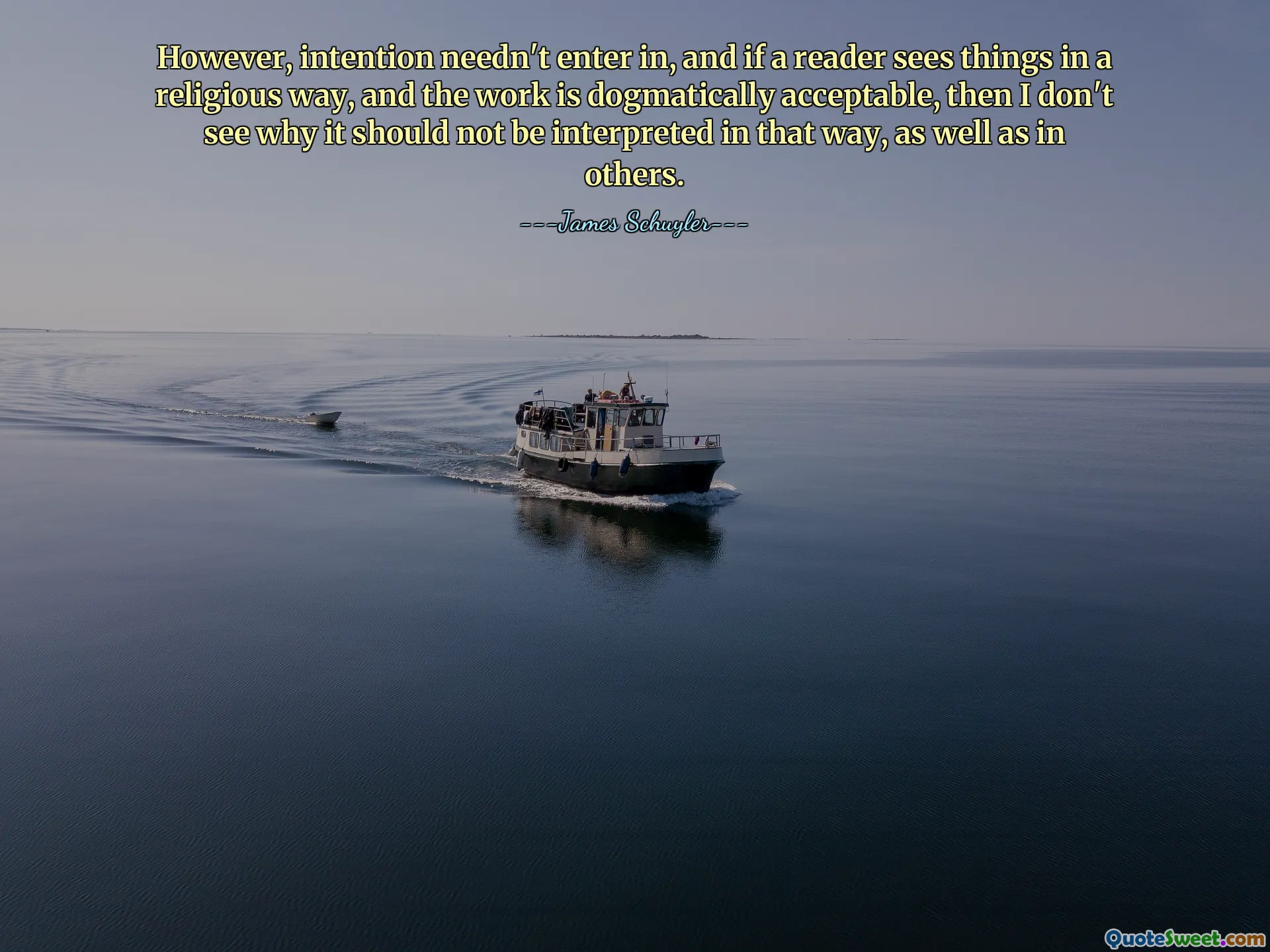
However, intention needn't enter in, and if a reader sees things in a religious way, and the work is dogmatically acceptable, then I don't see why it should not be interpreted in that way, as well as in others.
This quote highlights the fluidity of interpretation, emphasizing that texts can hold multiple meanings depending on the reader's perspective. It suggests that rigidly imposing a singular intent may limit the richness of understanding, especially when a work aligns with certain dogmatic or religious frameworks. Embracing various interpretations fosters a broader appreciation of literature and art, recognizing that personal beliefs and experiences can shape unique connections with the material. Such an open approach encourages inclusive dialogues and explores diverse viewpoints, enriching the engagement with any work.
---James Schuyler---