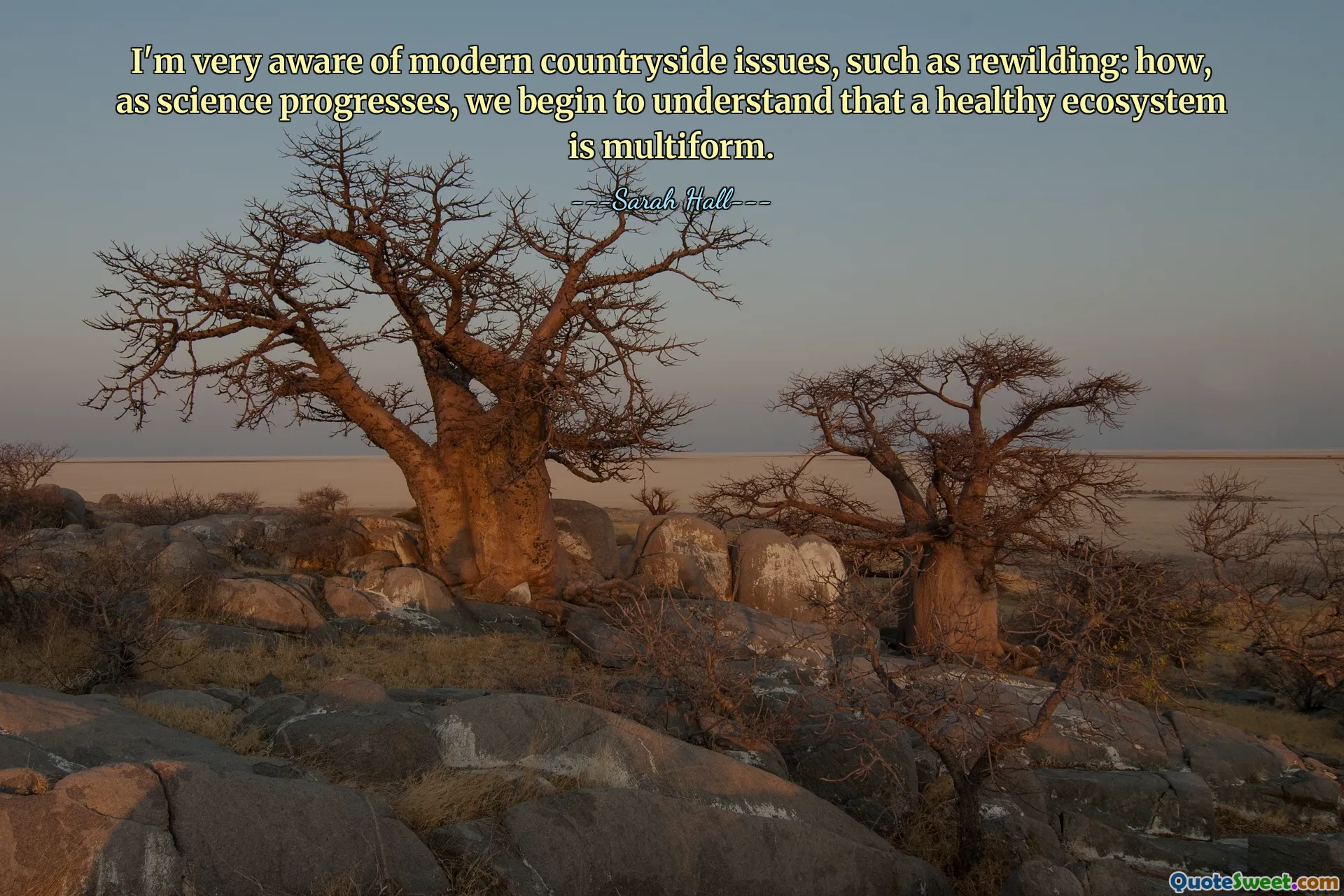
I'm very aware of modern countryside issues, such as rewilding: how, as science progresses, we begin to understand that a healthy ecosystem is multiform.
The emphasis on rewilding and the recognition that a healthy ecosystem is multiform reflects a profound shift in how we perceive and value the natural world. Traditionally, landscapes were often managed with a focus on agricultural productivity or aesthetic appeal, sometimes at the expense of ecological diversity. Today, scientific advancements have deepened our understanding of ecosystems as complex, interconnected systems where biodiversity is crucial for resilience and stability. Rewilding emphasizes the importance of returning land to a more natural state, allowing native flora and fauna to flourish without excessive human intervention. This approach not only sustains or restores ecological balance but also enhances the resilience of ecosystems against climate change, pests, and other environmental threats. Moreover, acknowledging that ecosystems are multiform encourages a holistic perspective, appreciating variety in plant and animal communities as essential for robustness. Such recognition necessitates a shift in conservation practices, policies, and personal attitudes, compelling us to see nature not as a uniform resource but as a mosaic of interdependent elements. This perspective also raises ethical considerations about our responsibilities towards nature and future generations. Embracing the complexity and richness of ecosystems can lead to more innovative and effective strategies for environmental preservation. As science continues to unravel the intricacies of ecology, our approach to countryside management evolves accordingly, emphasizing diversity, harmony, and sustainability. This ongoing journey underscores the interconnectedness of all living things and the importance of respecting the multifaceted nature of the natural environment.