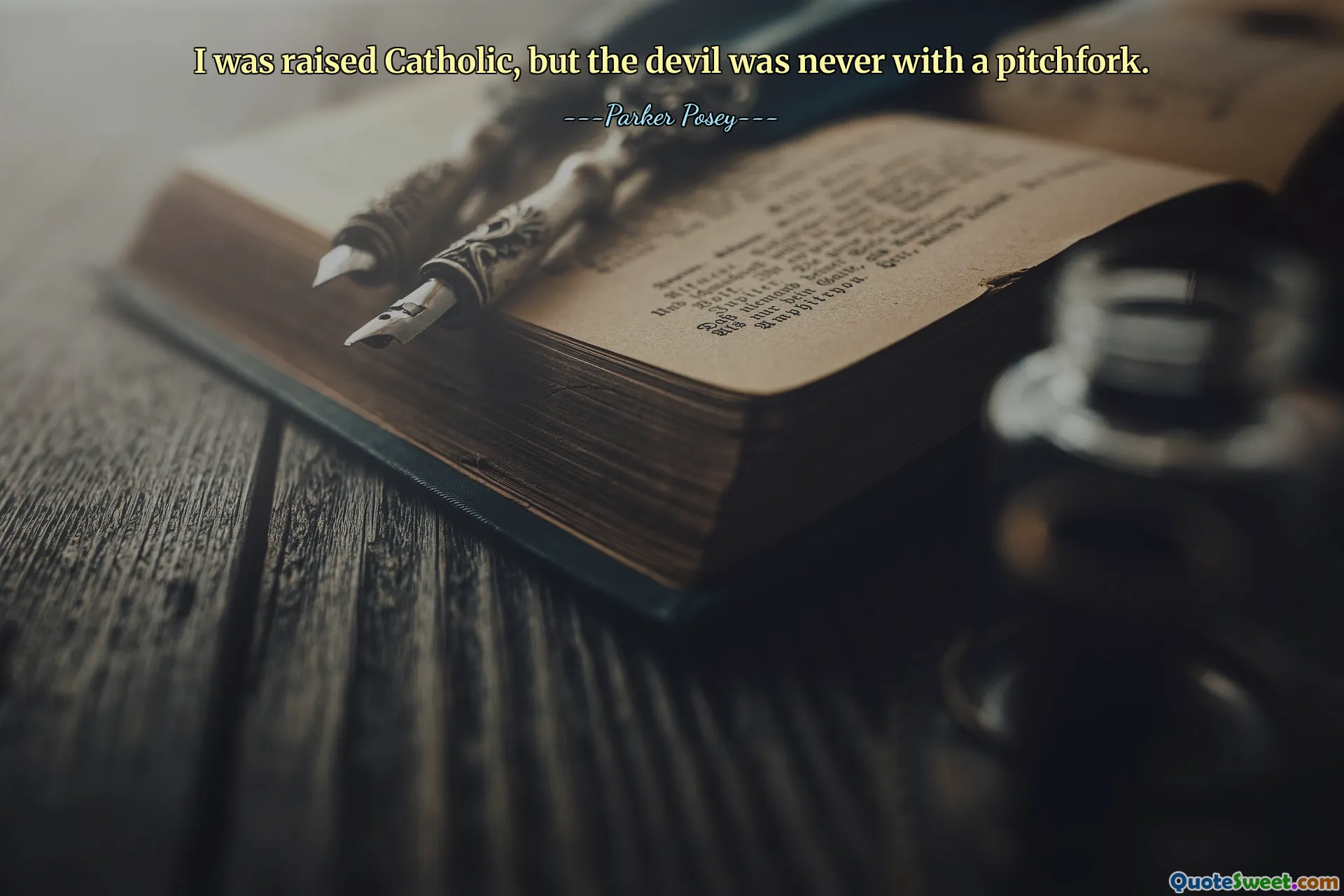
I was raised Catholic, but the devil was never with a pitchfork.
This quote offers a nuanced perspective on the common portrayal of evil and temptation. Often, societal narratives depict the devil as a menacing figure wielding a pitchfork, symbolizing pure evil and malevolence. However, the speaker's revelation that they were raised Catholic but never encountered such a traditional depiction suggests that evil or temptation may not always be as simplistic or overt as graphic symbols or stereotypes. It prompts reflection on how moral struggles are internal and complex, sometimes subtle, and not always aligned with the theatrics often associated with evil. The phrase challenges the stereotypical imagery and encourages one to consider the facades that hide more profound moral or psychological conflicts. It’s a reminder that appearances can be deceiving; what seems sinister or straightforward might be more nuanced. The quote can also be interpreted as a critique of how societal or religious teachings might oversimplify the nature of evil, leading individuals to have preconceived notions that don't necessarily align with their personal experiences. In the broader sense, it emphasizes the importance of understanding morality and temptation beyond superficial signs and symbols. Ultimately, it invites introspection into the true nature of our moral challenges—sometimes, the 'devil' isn't in the obvious places, but rather in subtle influences and internal struggles that defy easy visualization or stereotyped imagery.