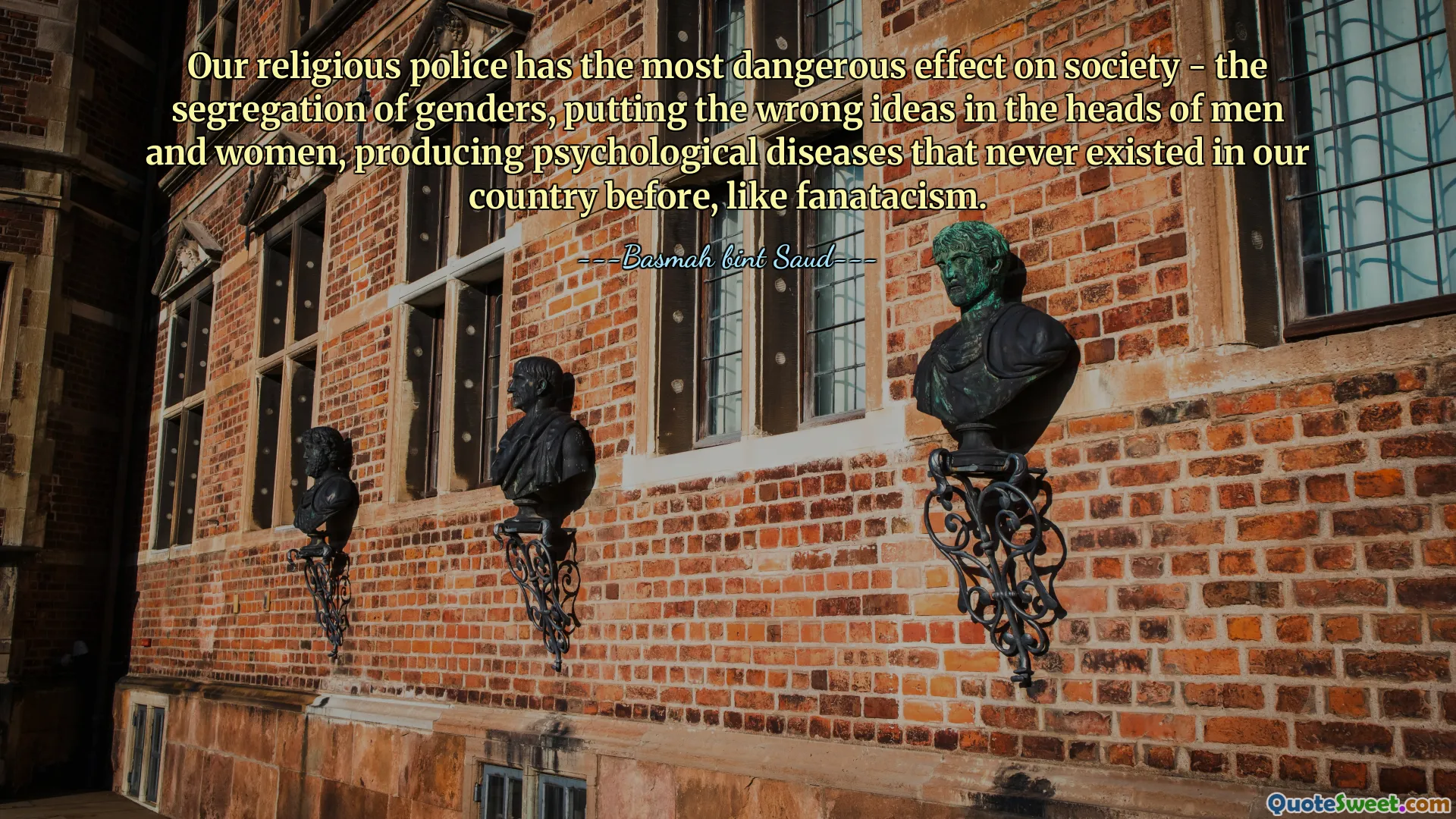
Our religious police has the most dangerous effect on society - the segregation of genders, putting the wrong ideas in the heads of men and women, producing psychological diseases that never existed in our country before, like fanatacism.
The quote highlights the profound social and psychological impacts that result from rigid enforcement by religious authorities, especially through gender segregation policies. Such measures often stem from conservative interpretations of cultural or religious norms, but their implementation can inadvertently foster environments where misunderstandings, stereotypes, and prejudices thrive. When genders are segregated, opportunities for genuine interaction diminish, limiting the capacity for empathy and mutual respect. This separation can also lead to the development of misconceptions about the other gender, breeding mistrust or fear. Furthermore, the suppression of open dialogue and shared experiences can cause mental health issues, as individuals may feel isolated or oppressed. The mention of fanatacism as a product of these policies points toward how extreme beliefs can be reinforced when ideas are restricted and controlled, rather than critically examined. It's essential to consider that policies which aim to uphold moral or religious standards should be balanced with the mental and social well-being of society’s members. In a healthy society, open communication, education, and understanding are vital to reduce prejudice and psychological harm. The quote underscores the importance of evaluating the effects of laws and regulations not just on external behaviors but on internal societal health, emphasizing the need for compassion and reformation that support psychological resilience and social cohesion.