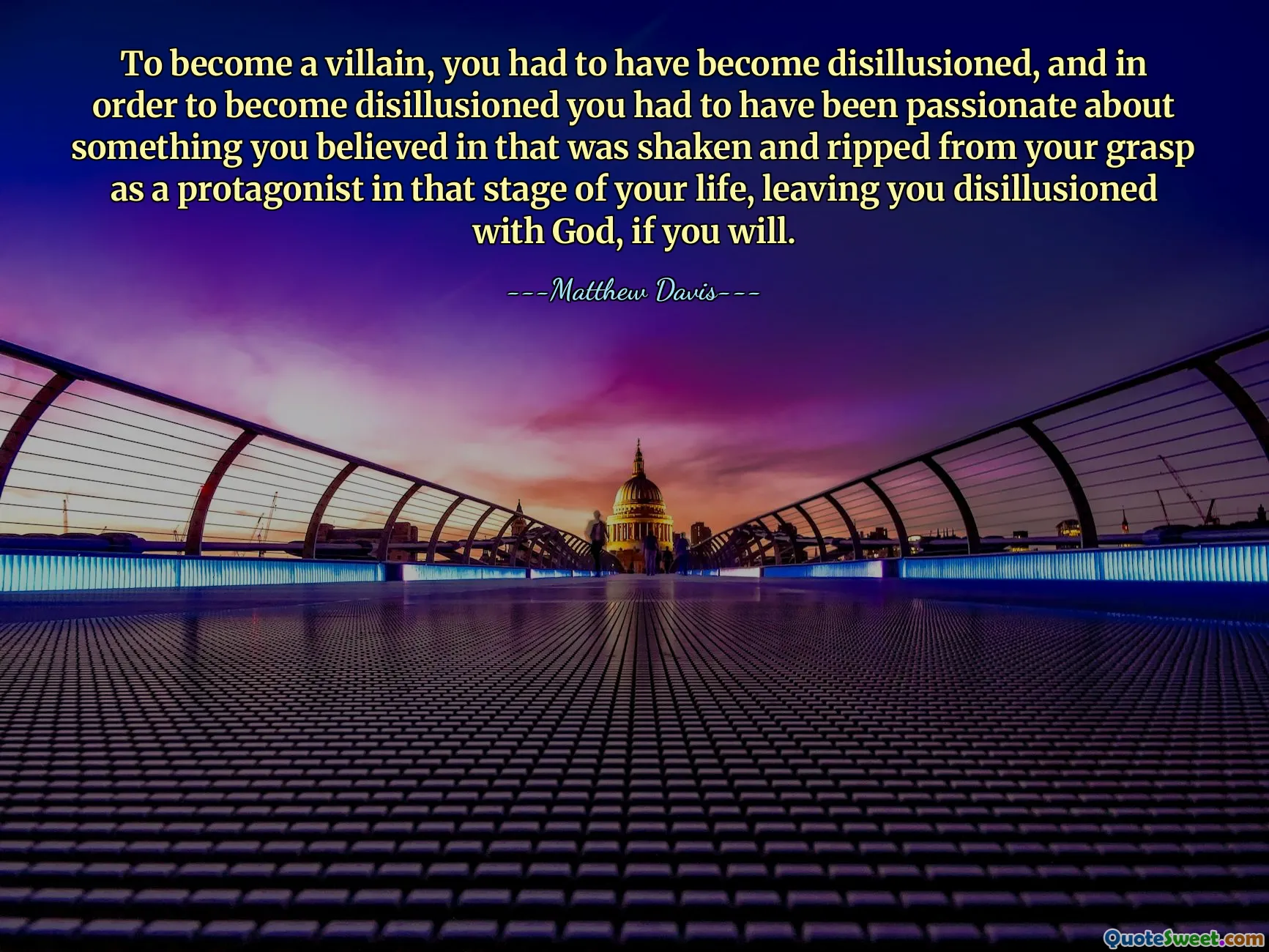
To become a villain, you had to have become disillusioned, and in order to become disillusioned you had to have been passionate about something you believed in that was shaken and ripped from your grasp as a protagonist in that stage of your life, leaving you disillusioned with God, if you will.
This quote delves into the complex journey from idealism to disillusionment, highlighting the emotional and psychological shifts that can turn an individual into a villain. It suggests that villains are not born inherently evil; rather, they are shaped by their experiences, especially by the loss of something deeply meaningful. The passion one holds in their early pursuits fuels their hope and purpose, but when this passion is shattered—be it through betrayal, failure, or injustice—that person may begin to question the foundation of their beliefs. Such disillusionment can evolve into anger, bitterness, or a sense of betrayal, which, if left unresolved, might transform into actions deemed villainous. The mention of being 'disillusioned with God' underscores a profound loss of faith, implying that the person’s moral compass and worldview have been profoundly shaken. These emotional upheavals are often catalysts for dramatic character shifts, illustrating that a villain is often a tragic figure molded by circumstance and inner turmoil. Understanding this emotional progression invites us to see such characters not merely as villains but as individuals shaped by their pain, hopes, and disillusionments. It prompts reflection on the importance of nurturing hope and resilience, and the danger inherent in allowing despair to consume us. Ultimately, the quote reminds us of the fine line between heroism and villainy, emphasizing the human stories behind the roles we often categorize superficially.