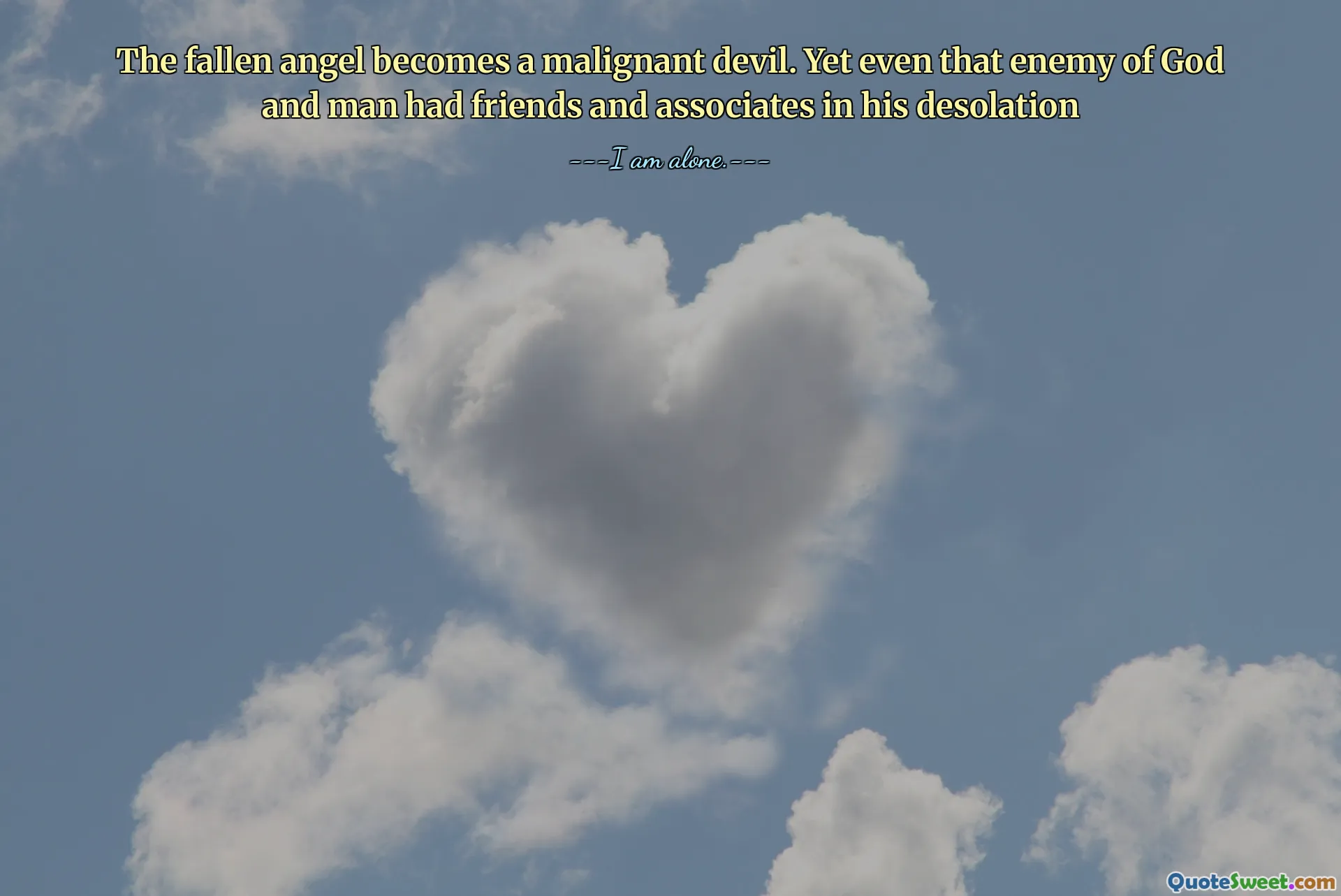
The fallen angel becomes a malignant devil. Yet even that enemy of God and man had friends and associates in his desolation
This quote explores the complex nature of evil and isolation. When an angel falls, it is often perceived as a tragic loss—an innocence lost and a descent into darkness. The transformation from a pure being to a malignant devil signifies the profound shift from a state of grace to one of malevolence. However, the quote highlights an important nuance: in his desolate state, even this fallen entity retains connections—friends and associates who perhaps pity, understand, or even share in his suffering. It underscores that evil or tragedy isn't always absolute or complete abandonment; rather, it exists within a context of interconnectedness. This reflection evokes a sense of the universal nature of companionship, suggesting that no suffering is entirely solitary, and that even those who seem most damned are not entirely isolated. It also prompts consideration of the environments and relationships that shape a being’s transformation—are friends and association a sign of compassion or complicity? The line invites us to examine the subtlety behind moral judgments, encouraging empathy towards those who have fallen from grace.* Given the duality of such figures, the quote reminds us that behind every 'monster' or villain, there are stories of connections, influence, and perhaps regret. The imagery contrasts divine purity with the corruption of the fallen, emphasizing that moral fall is never absolute and that in the depths of darkness, some semblance of past relationships remains. The reflection becomes a meditation on the nature of friendship, allegiance, and the ongoing presence of social bonds even in the bleakest of circumstances.