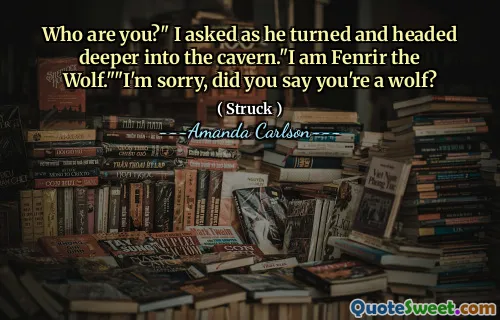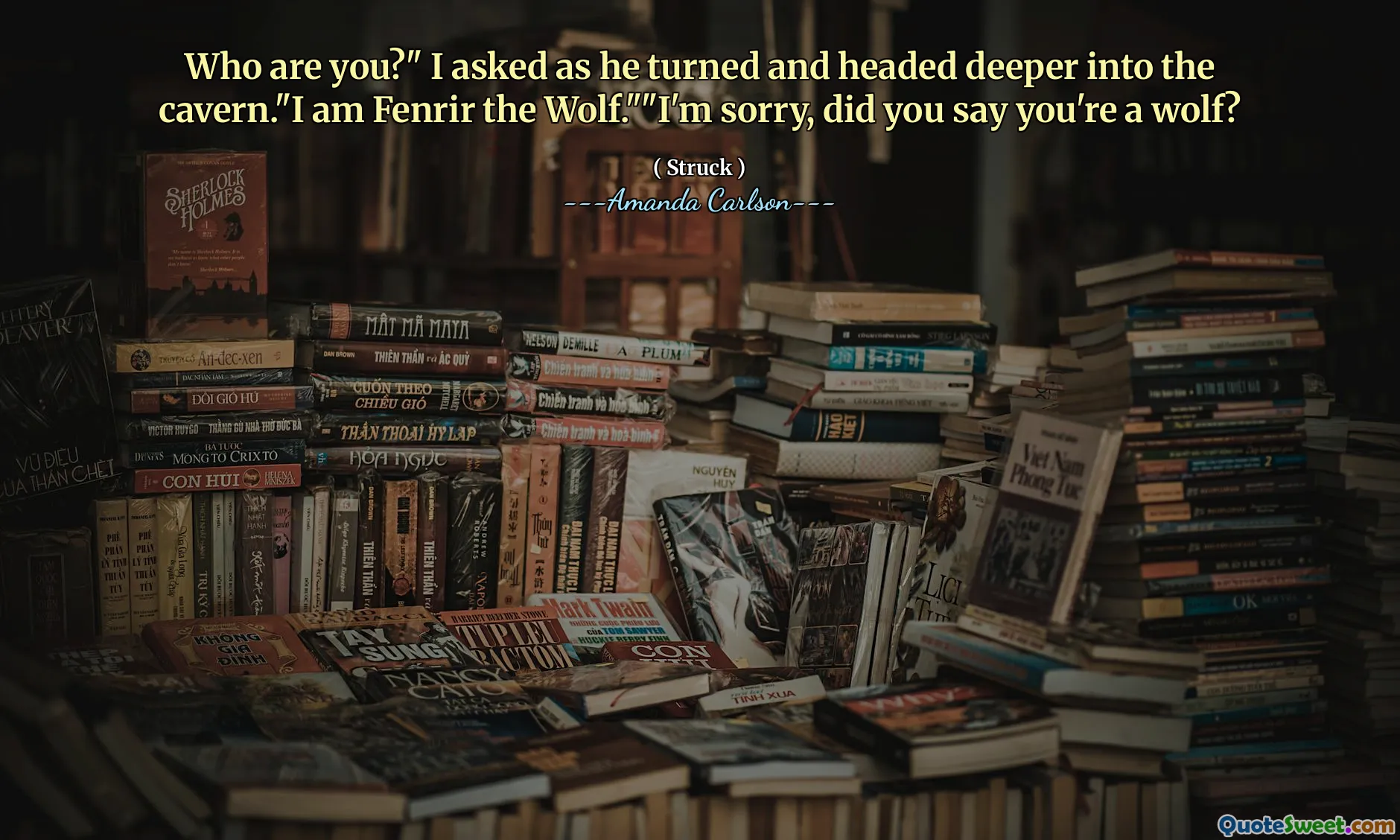
Who are you?" I asked as he turned and headed deeper into the cavern."I am Fenrir the Wolf.""I'm sorry, did you say you're a wolf?
This quote captures a moment of curiosity and surprise, highlighting the intersection of identity and the unexpected. When the speaker asks, "Who are you?", it suggests a desire to understand the true nature or role of the individual they are confronting. The response, "I am Fenrir the Wolf," introduces a mythic or symbolic characterization, implying strength, primal instincts, and perhaps a connection to ancient tales. The subsequent disbelief in the question, "Did you say you're a wolf?", emphasizes the surreal or fantastical element of the situation, where identities blur the line between human and beast. Such moments prompt reflections on how we perceive others based on appearances, actions, or myths rather than their true essence. It also raises questions about the roles we adopt or are assigned—whether by nature, society, or self-perception. Throughout stories and folklore, wolves are often associated with chaos, loyalty, or wilderness, symbolizing both danger and freedom. When someone claims to embody such an archetype, it invites us to consider the complexity beneath visible identities and the stories we tell ourselves to make sense of them. This scene draws the reader into a layered narrative where identity is fluid, and the extraordinary becomes believable within the context of myth and legend. It highlights how beliefs and perceptions can shift when challenged by truth or fantastical revelations, urging readers to reflect on their own assumptions about what lies beneath the surface of others and themselves.