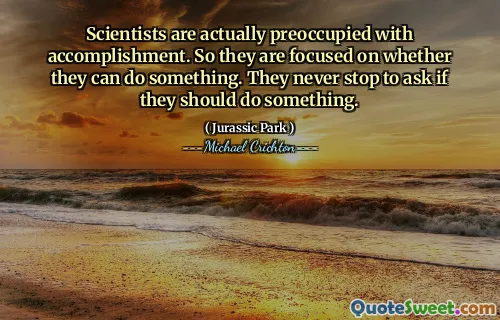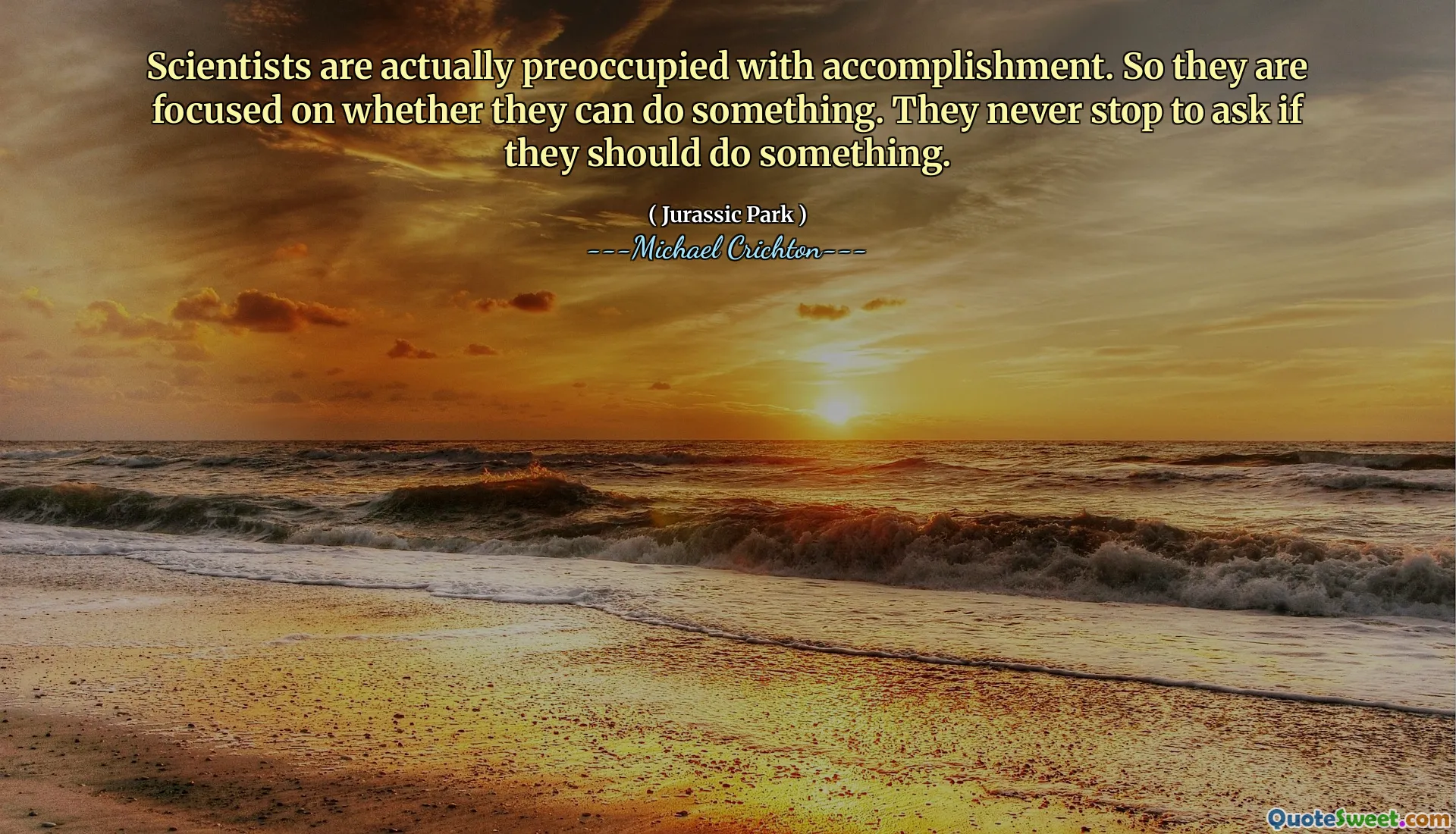
Scientists are actually preoccupied with accomplishment. So they are focused on whether they can do something. They never stop to ask if they should do something.
This quote highlights a critical aspect of scientific progress—the often unchecked pursuit of capability without sufficient ethical consideration. In the race to innovate and achieve new frontiers, scientists and technologists are naturally driven by curiosity, discovery, and the desire to push boundaries. While these qualities ignite remarkable advancements that can benefit humanity, they can also lead to unintended consequences if moral and ethical implications are overlooked. The analogy can be drawn to a child handed a powerful tool without understanding its potential to cause harm—emphasizing the need for responsibility and foresight.
Historically, many innovations initially lacked ethical controls, which sometimes resulted in adverse effects. For example, the development of nuclear technology brought both beneficial energy sources and destructive weapons. Similarly, advancements in genetic engineering, artificial intelligence, and robotics promise immense benefits but equally pose risks if misused or pursued without moral reflection.
The core lesson here underscores the importance of examining not just the 'can we do this?' question but also the vital 'should we?' inquiry. Responsible science and technology require a balanced approach—one that incorporates ethical scrutiny, societal impact assessments, and long-term thinking.
In modern times, fostering a culture of ethical responsibility among researchers is crucial to ensure that scientific progress aligns with human values and safety. Encouraging interdisciplinary dialogue, involving ethicists, policymakers, and the public in decision-making processes, can help ensure that innovation benefits all and avoids potential harm. Ultimately, true progress integrates the pursuit of knowledge with the wisdom of moral judgment, acknowledging our profound responsibility as creators and custodians of new possibilities.