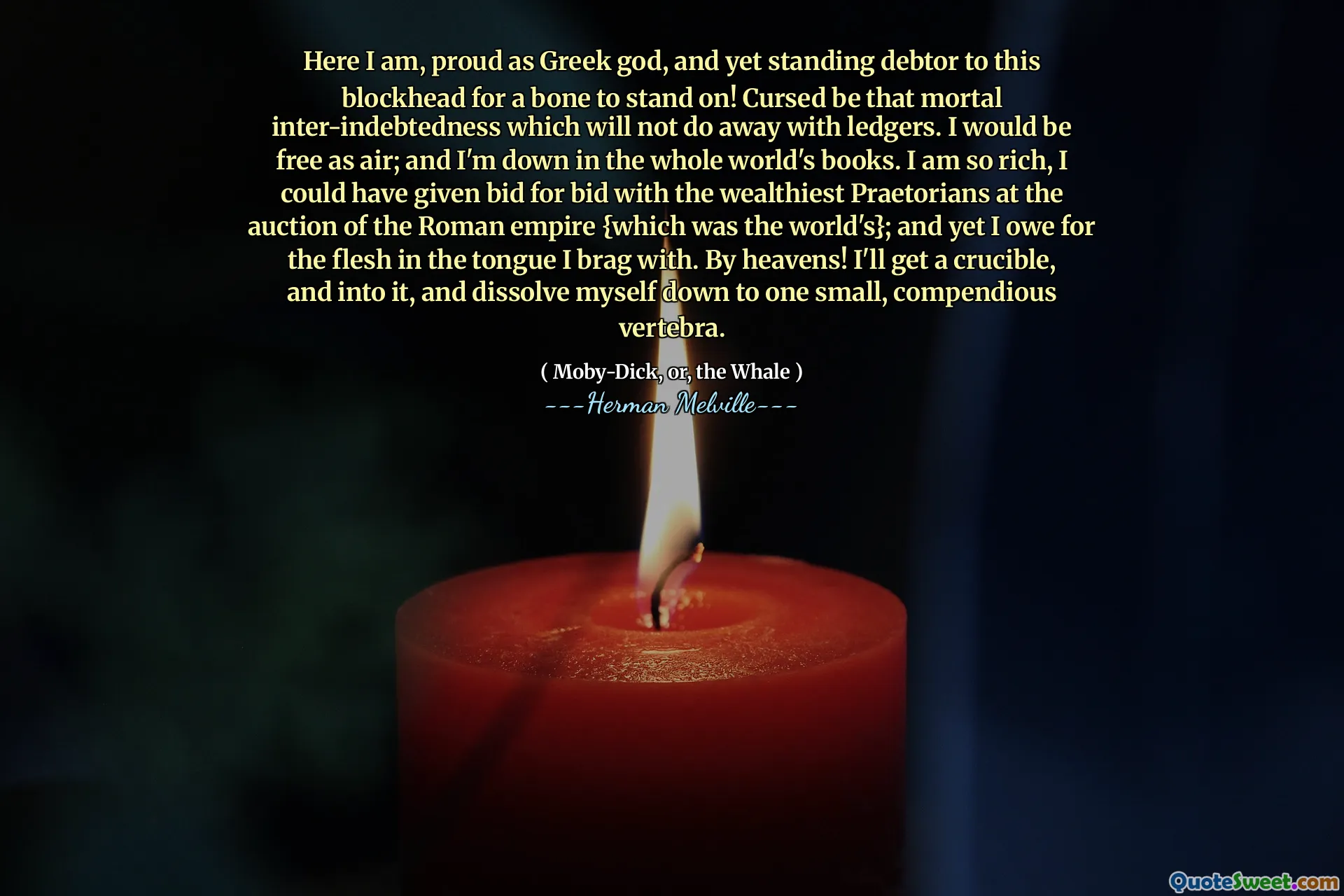
在这里,我为希腊神感到骄傲,但却坚持债务人到这个障碍者,以使骨头站在骨头上!被诅咒的是凡人的跨性别跨性别者不会消除分类帐。我会自由地作为空气;而且我在全世界的书中都很沮丧。我很富有,我本可以在罗马帝国的拍卖中与最富有的praetorians竞标{这是世界的};但是我欠我吹牛的肉。天上!我会得到一个坩埚,然后将自己溶解到一个小的,构图的椎骨中。
(Here I am, proud as Greek god, and yet standing debtor to this blockhead for a bone to stand on! Cursed be that mortal inter-indebtedness which will not do away with ledgers. I would be free as air; and I'm down in the whole world's books. I am so rich, I could have given bid for bid with the wealthiest Praetorians at the auction of the Roman empire {which was the world's}; and yet I owe for the flesh in the tongue I brag with. By heavens! I'll get a crucible, and into it, and dissolve myself down to one small, compendious vertebra.)
这句话反映了对债务和唯物主义的深刻讽刺和挫败感。演讲者感到有力量而富有,承认了一个悖论,尽管他们的财富与古罗马最富有的人相当,但他们仍然对某人看着自己的生存之类的东西。这突出了财务义务的负担,这些义务压制了他们,从而限制了他们的自由和自豪感。
想要解散自己的椎骨的图像象征着逃避生活的复杂性和纠缠的愿望,包括与财富相关的社会压力。演讲者渴望从债务负担及其随之而来的期望中解放,这强调了自我价值与社会限制之间的斗争。这个概念引起了人们的共鸣,这说明了对财富的追求如何讽刺地导致自主权的依赖和丧失。