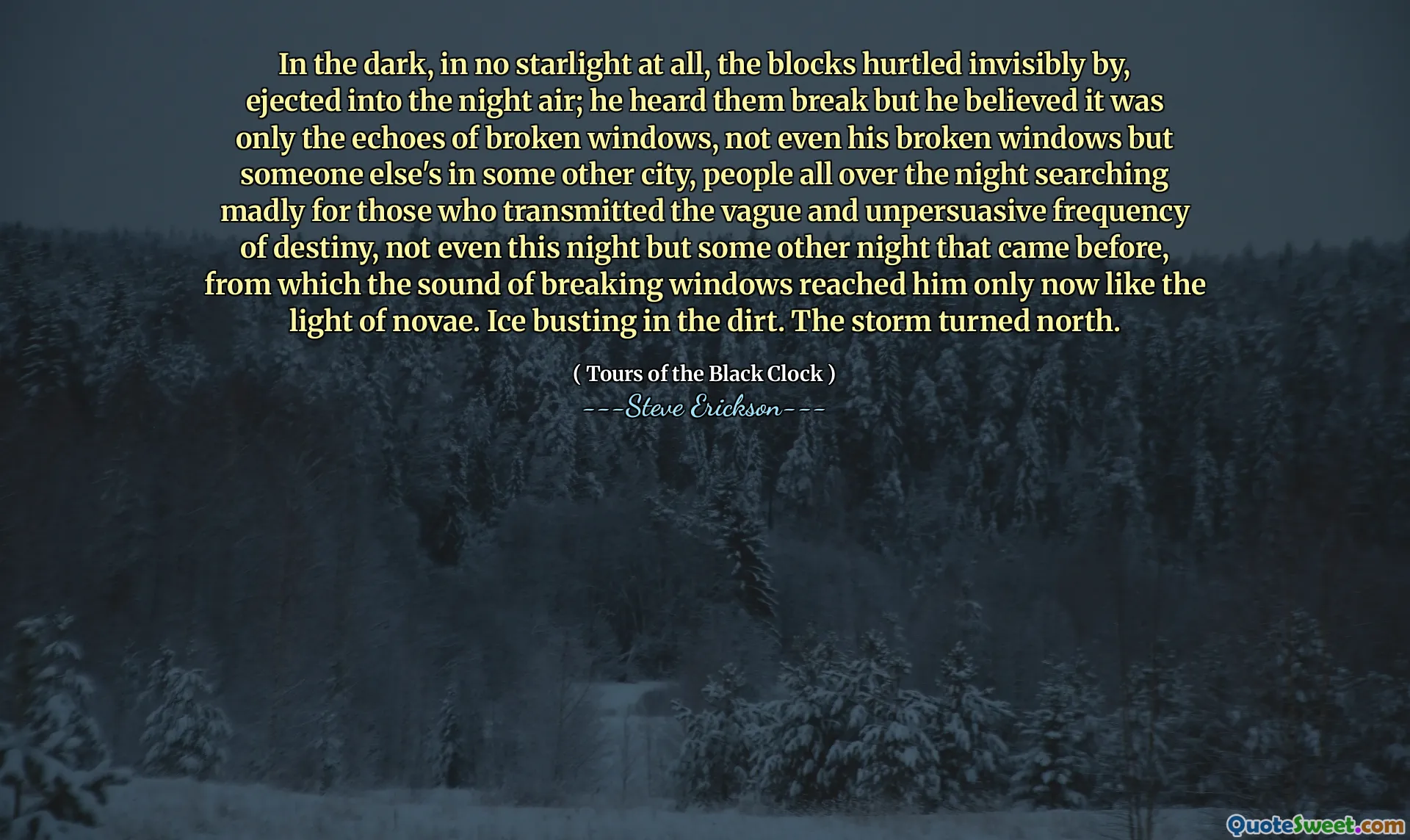
在黑暗中,根本没有星光,这些块被视而不见地被刺入夜空。他听到他们打破了,但他认为这只是窗户破裂的回声,甚至不是他破碎的窗户,而是其他人在其他城市中,整夜都在疯狂地搜寻那些传播命运的模糊和不夸张的频率的人,甚至不是这个晚上,而是另一个夜晚,而是在此之前,从那以前,闯入他的声音就触及了他,就像他一样,像他一样触及了Novae。冰块在泥土中破裂。暴风雨向北转。
(In the dark, in no starlight at all, the blocks hurtled invisibly by, ejected into the night air; he heard them break but he believed it was only the echoes of broken windows, not even his broken windows but someone else's in some other city, people all over the night searching madly for those who transmitted the vague and unpersuasive frequency of destiny, not even this night but some other night that came before, from which the sound of breaking windows reached him only now like the light of novae. Ice busting in the dirt. The storm turned north.)
在史蒂夫·埃里克森(Steve Erickson)的《黑色时钟之旅》中,主角经历了一个超现实的时刻,环境几乎无法识别。随着块被投射到黑暗中,破坏的声音与破碎的窗户的回声融合在一起,这表明与不同城市生活的混乱现实有更深的联系。这一刻强调了集体动荡的孤立感,因为人们在未知的命运频率中寻找意义。
叙述捕捉了绝望的本质和时间的流逝,过去事件在当下引起了共鸣。破坏窗户和风暴转移方向的图像增加了在充满不确定性的世界中理解自己的位置的紧迫感。埃里克森(Erickson)的散文探讨了命运,记忆和看不见的话题,这些主题将个人束缚在他们的共同经历中,这使读者思考着无形的力量塑造了自己的生活。