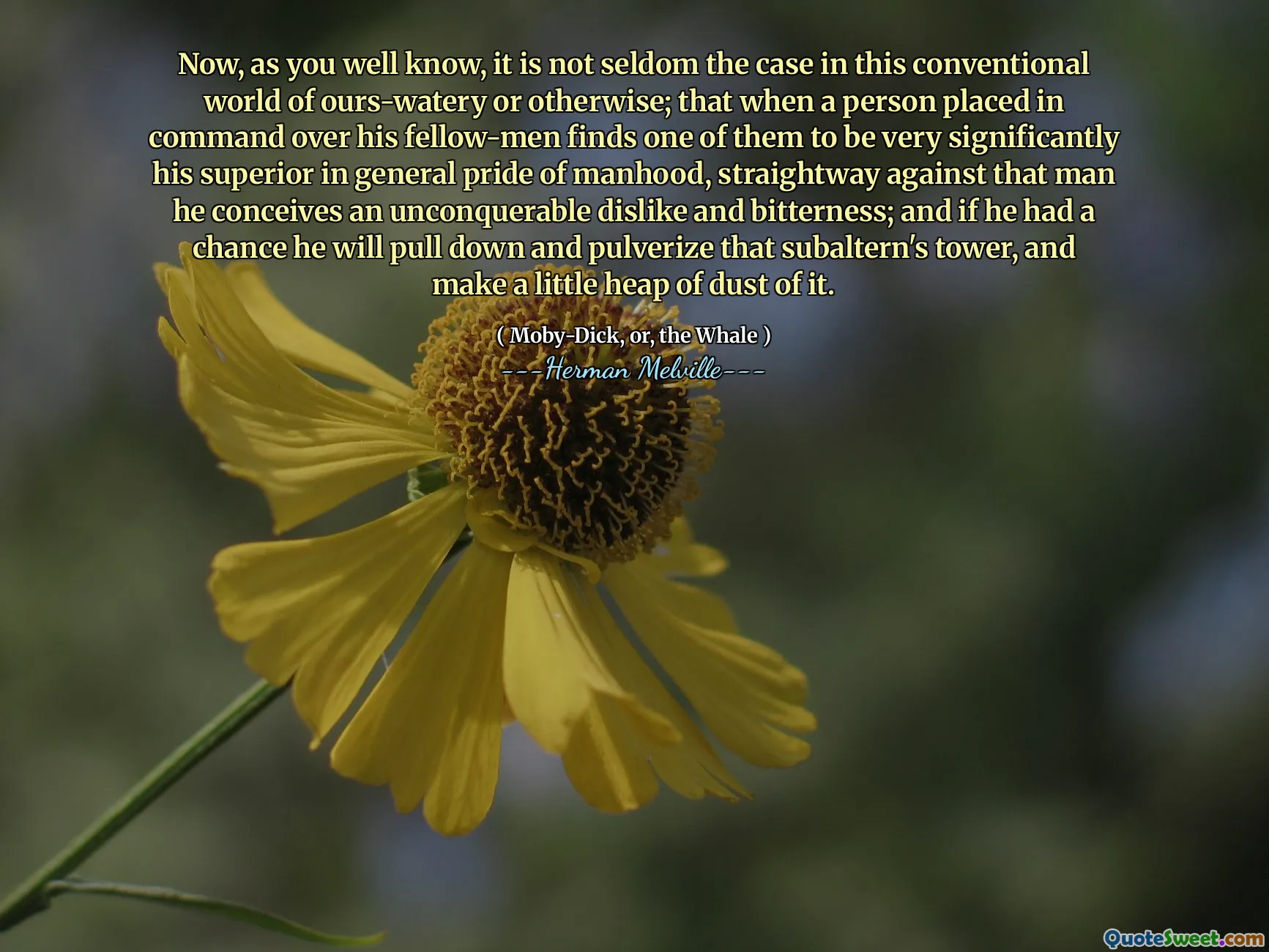
现在,众所周知,在这个传统的世界或其他情况下,这并不是很少如此。当一个人对同胞的指挥官发现其中一个人是他对男子气概的普遍自豪感的极大上等时,他直接对那个男人感到构想。如果他有机会,他会下拉并粉碎那个subaltern的塔,并做一点灰尘。
(Now, as you well know, it is not seldom the case in this conventional world of ours-watery or otherwise; that when a person placed in command over his fellow-men finds one of them to be very significantly his superior in general pride of manhood, straightway against that man he conceives an unconquerable dislike and bitterness; and if he had a chance he will pull down and pulverize that subaltern's tower, and make a little heap of dust of it.)
Moby-Dick的名言突出了领导力和力量的复杂动力。它表明,处于权威职位的人可能会受到那些表现出更大素质的人的威胁,例如自豪感和自信。这种认为的优势可以激发嫉妒和怨恨的感觉,促使领导者破坏或损害他们羡慕的人的声誉。这种情绪可能会导致有毒的环境,在这种环境中,才华横溢的成就纯粹是出于恶意而被忽略的。
这种紧张局势说明了人性的根本缺陷,在那里恐惧被掩盖的恐惧驱动了破坏性的行为。领导者的主张控制的愿望可能导致他们积极地对抗下属,而不是培养支持性的氛围。梅尔维尔(Melville)的见解反映了对社会结构的更广泛的评论,在这种结构中,野心和优越性可以促使当权者之间的不安全感,导致腐败和冲突,而不是协作和成长。