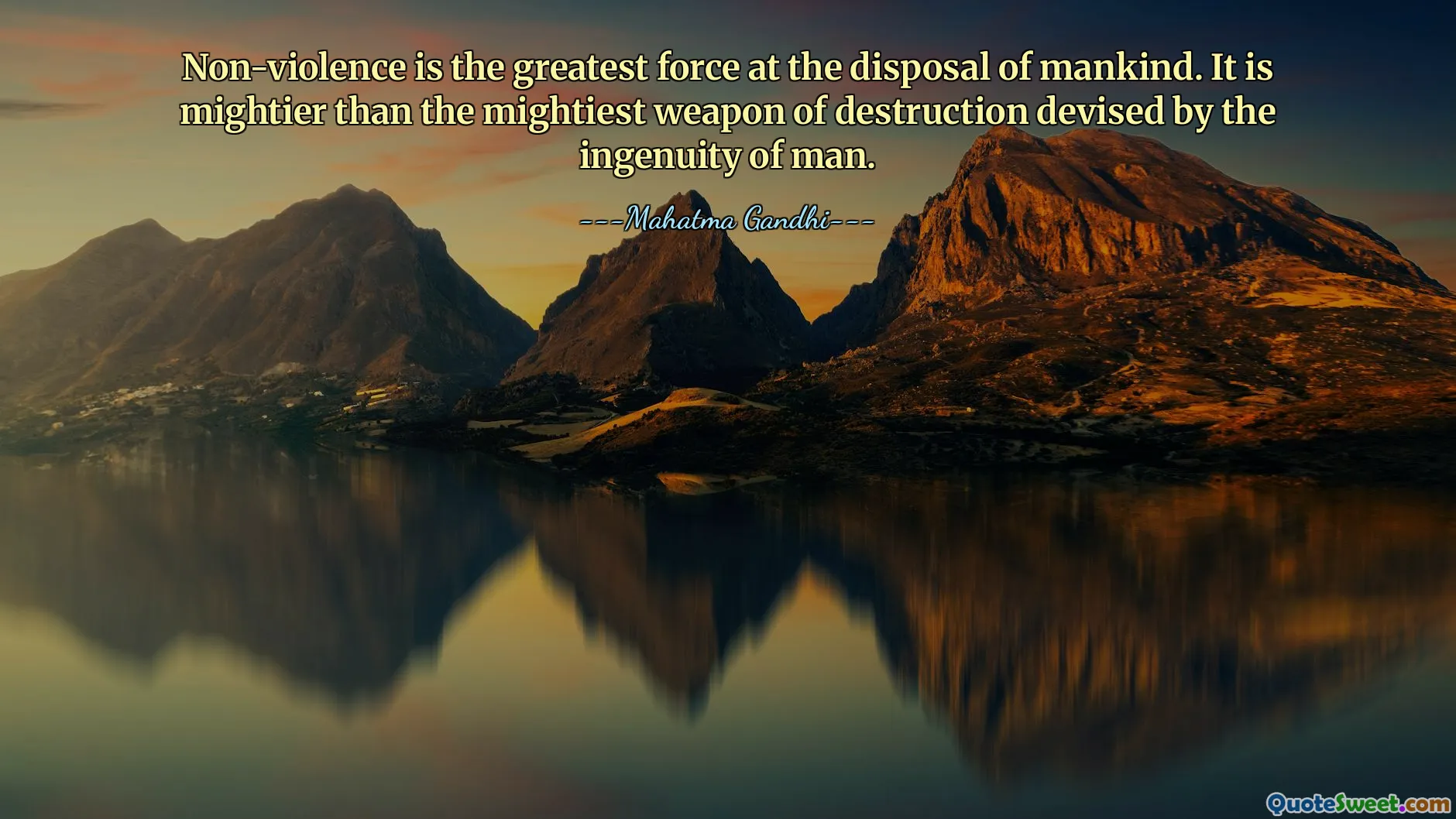
Nenásilí je největší silou, kterou má lidstvo k dispozici. Je mocnější než nejmocnější ničivá zbraň vynalezená lidskou vynalézavostí.
(Non-violence is the greatest force at the disposal of mankind. It is mightier than the mightiest weapon of destruction devised by the ingenuity of man.)
The essence of this profound statement by Mahatma Gandhi lies in the recognition that true power does not stem from violence or destruction but from non-violence and peace. In a world where physical strength and advanced weaponry often dominate narratives of power, Gandhi redirects our understanding towards the immense strength of peaceful resistance. Nenásilí není pouze pasivní; je to mocná síla, která může způsobit společenské a politické změny bez devastace, kterou násilí nevyhnutelně zanechává.
Filosoficky představuje nenásilí nejvyšší formu úcty k lidské důstojnosti a životu. Vyzývá lidstvo, aby řešilo konflikty spíše dialogem, porozuměním a soucitem než hrubou silou a nátlakem. History has shown us various movements, led by Gandhi himself, Martin Luther King Jr., and others, where the commitment to non-violence has catalyzed tremendous transformations. Odhaluje západ tyranie a úsvit svobody ne skrze krveprolití, ale skrze kolektivní morální sílu.
Přijetí této síly vyžaduje nesmírnou odvahu, trpělivost a přesvědčení, což jsou vlastnosti nezbytné pro každého, kdo si přeje vytvořit trvalou změnu. It challenges the conventional notion that might is right and provides a hopeful message: that peace and ethical persuasion carry greater and more enduring power than any weapon forged in anger or hatred. Tento citát slouží jako nadčasová připomínka, že cesta ke spravedlivé společnosti nespočívá v destrukci, ale v porozumění a míru.