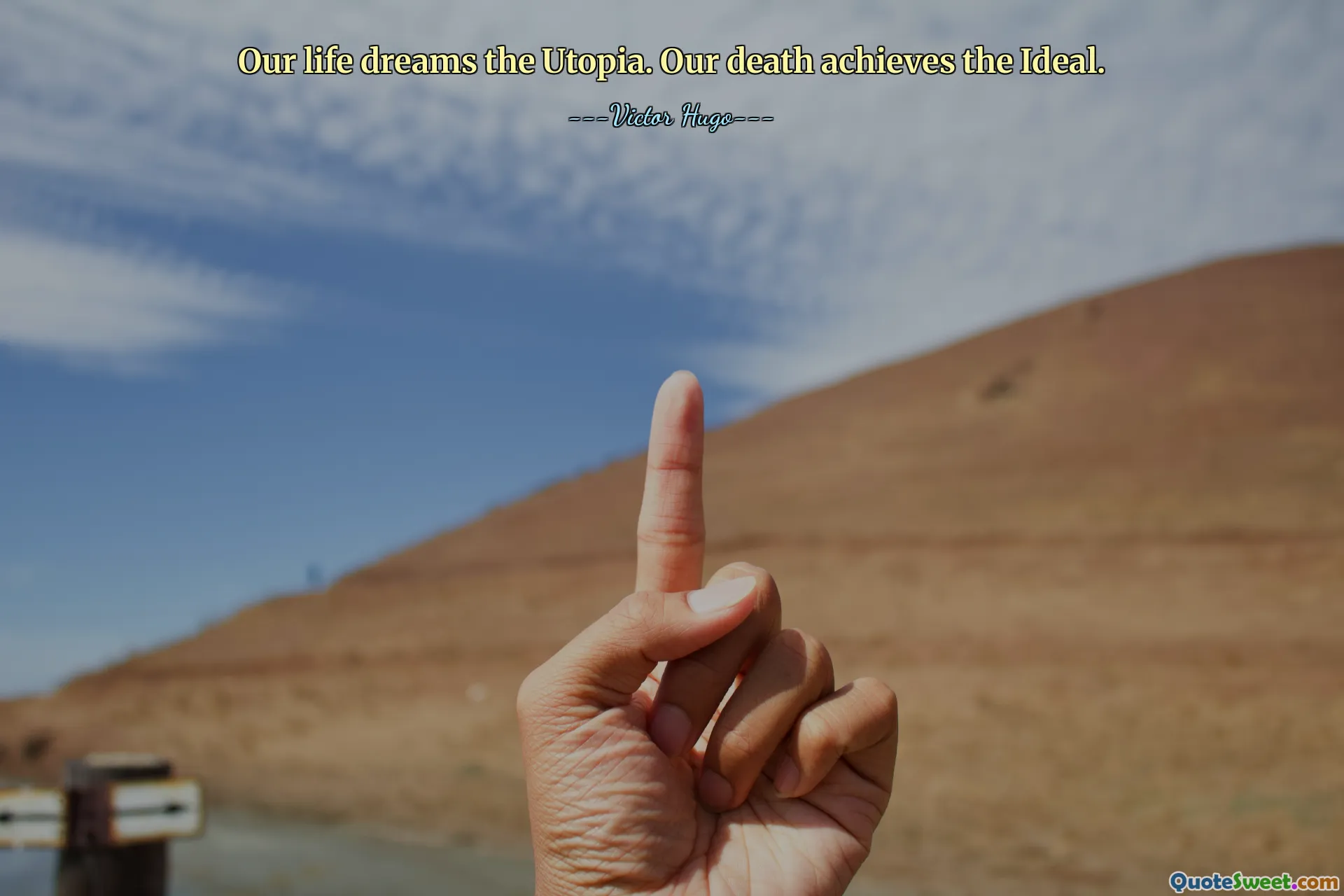
حياتنا تحلم باليوتوبيا. موتنا يحقق المثل الأعلى.
(Our life dreams the Utopia. Our death achieves the Ideal.)
يلخص هذا الاقتباس وجهة نظر عميقة حول طموح الإنسان والسعي إلى الكمال. Throughout history, humanity has been driven by the desire to envision and attain a perfect society, a place where justice, peace, and happiness prevail—what Victor Hugo might have considered utopia. During our lives, this dream persists, inspiring artists, thinkers, and leaders to strive toward betterment, often blinded by the idealistic vision of what could be. It reflects the understanding that our conscious existence is fueled by hope and the relentless pursuit of dreams that may remain distant but are essential for purpose and motivation.
ومع ذلك، فإن الاقتباس يسلط الضوء أيضًا على مفارقة مثيرة للاهتمام: وهي أن الإدراك الحقيقي للـ "المثالي" لا يحدث إلا بعد الموت. This suggests that while our earthly ambitions may fall short, the legacy of our striving—our ideals—are cemented in eternity, transcending mortality. ويؤكد أن المساعي البشرية هي بطبيعتها غير كاملة ومؤقتة، ولكن مفاهيمها المثالية لا تزال حية، وتلهم الأجيال القادمة.
علاوة على ذلك، يتحدى هذا المنظور التصور السائد بأن الطموحات مخصصة للأحياء فقط؛ إنه يرفع مستوى فعل الحلم والسعي لتحقيق المثل الأعلى باعتباره مسعى نبيلًا، وربما حتى إلهيًا. The contrast between the dream of utopia in life and the achievement of the ideal after death underscores the importance of sustenance through hope, even amidst inevitable imperfection. It inspires us to persist in our pursuits, knowing that our influence extends beyond our mortal existence, shaping the collective consciousness and possibly guiding us toward a more ideal future.
In a philosophical sense, this quote also invites reflection on the nature of perfection itself—likely an ever-receding horizon that pushes us to improve continually, even knowing that the ultimate perfection may be beyond our grasp. ومع ذلك، فإن الرحلة نفسها، والحلم، والسعي هي التي تضفي معنى على حياتنا وموتنا.