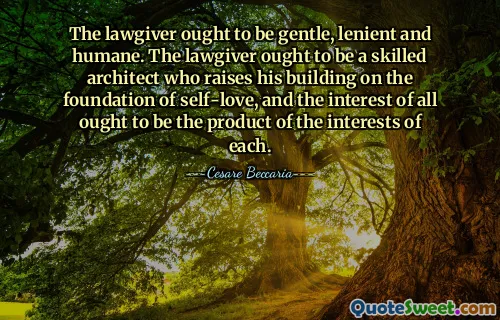
Cesare Beccaria was an influential Italian philosopher and criminologist in the 18th century, best known for his work on criminal justice reform. He argued against the use of torture and the death penalty, advocating for a rational and humane approach to law. His book, "On Crimes and Punishments," published in 1764, laid the foundations for modern penology by emphasizing the need for laws to be clear, public, and aimed at promoting social order rather than revenge. Beccaria believed that punishments should be proportionate to the crimes committed and that the focus should be on preventing crimes rather than inflicting harsh penalties. He emphasized the importance of deterrence and critiqued arbitrary justice systems. His ideas contributed to the Enlightenment movement, promoting the principles of rationality, human rights, and the social contract. Today, Beccaria's work remains relevant in discussions of criminal law and human rights. His emphasis on fairness and justice in the legal system has inspired numerous reforms worldwide. His legacy endures as a key figure in the development of modern criminal justice theory and practice.
Cesare Beccaria was an Italian philosopher and legal theorist born on March 15, 1738. His most notable contributions come from his writings on criminal law and justice. Through his influential work, he aimed to reform the legal system of his time.
Beccaria's ideas advocate for rational and humane treatment of offenders, significantly impacting legal thought. His work played a pivotal role in the Enlightenment, promoting ideals of equality and justice.
His legacy continues to resonate today as it laid the groundwork for contemporary discussions regarding human rights and the reform of criminal justice systems worldwide.
Se mer »
Today Birthdays
1866 -
Gilbert Murray
1959 -
Patrick Nielsen Hayden
1956 -
Lynda Barry
1920 -
Isaac Asimov
1928 -
Daisaku Ikeda
1938 -
Robert Smithson
1967 -
James Marshall
1938 -
David Bailey
1936 -
Roger Miller
1909 -
Barry Goldwater
1983 -
Kate Bosworth
1962 -
April Winchell
1940 -
Jim Bakker
1963 -
Matthew Stewart
1942 -
Dennis Hastert
1905 -
Michael Tippett
1970 -
Eric Whitacre
1947 -
Jack Hanna
1858 -
Beatrice Webb
1972 -
Taye Diggs
1963 -
David Cone
1991 -
Ben Hardy
1913 -
Anna Lee